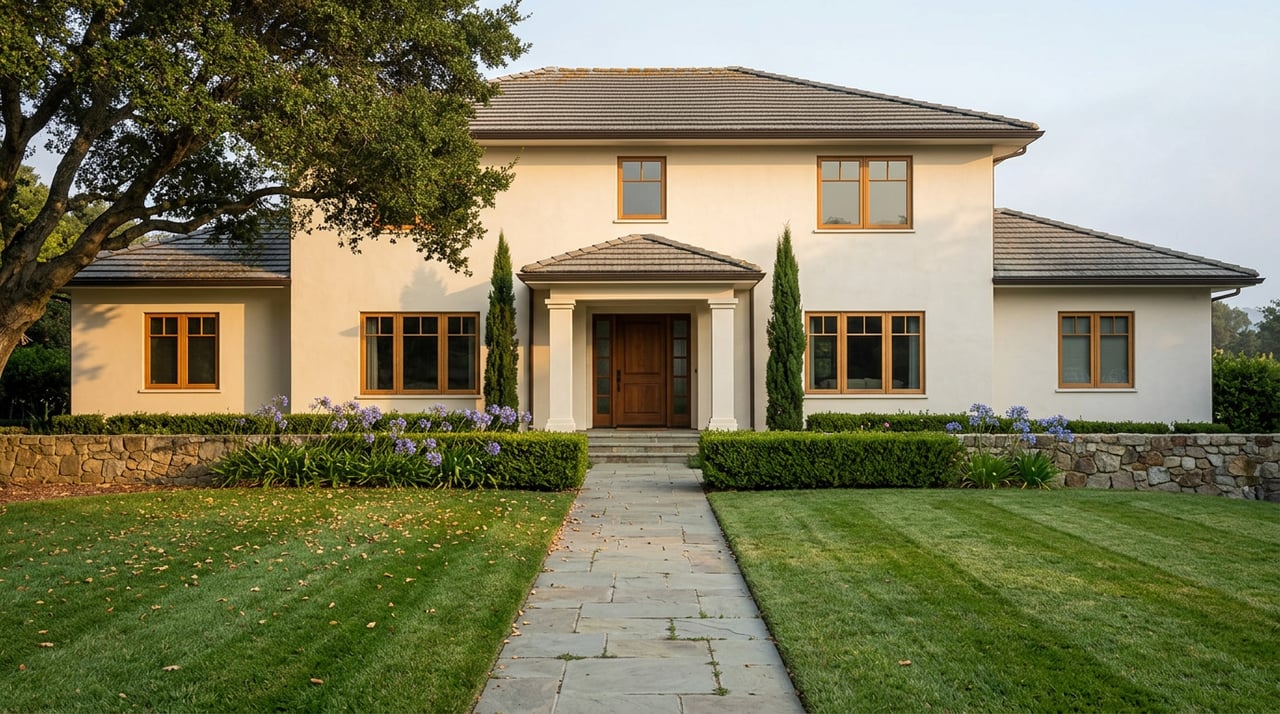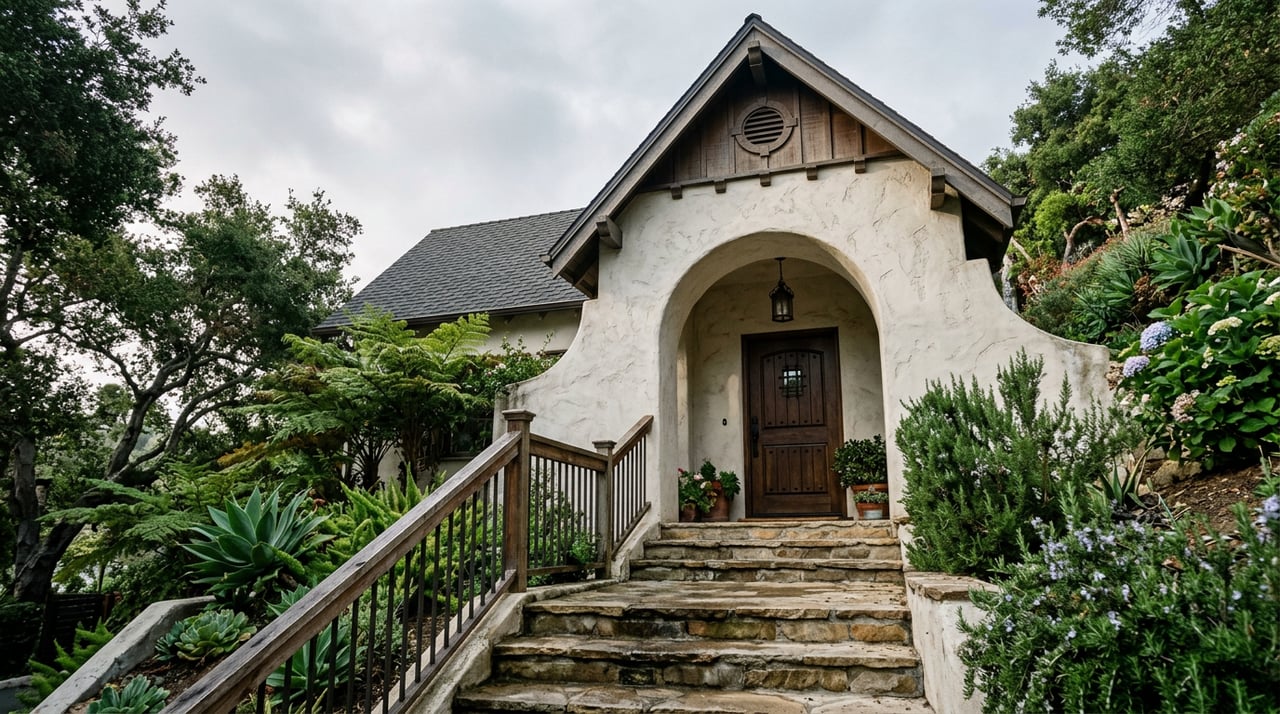
Forest Hill's first house went up in February 1914 on Pacheco Street, designed by architect David Coleman for a neighborhood that had just been carved out of curving hillside lots by the Newell-Murdoch Company. More than a century later, the street's newest proposed house is also on Pacheco, and it has turned into the loudest fight the neighborhood has seen in years.
The dispute is over 288 Pacheco St., a vacant corner lot at Pacheco and Marcella. A five-bedroom house with an approved design is scheduled for a Planning Commission hearing on September 10. Neighbors, led by residents named Haas and Zumsteg, have filed for discretionary review, and dozens of others signed a petition submitted to the Forest Hill Association. Their objections center on a mansard-style roof that adds roughly 1,475 square feet of attic space and comes in just a few inches short of counting as a full fourth story, and on a mature maple tree on the property that the current design would remove. Lawrence Pitts, who has lived next to the lot for 50 years, put his concern to The Standard plainly: "My concern is what appears to be a massive structure on one and a half lots."
If you're comparing Forest Hill to other west-side San Francisco neighborhoods right now, this case matters more than any listing you'll see on a portal. It's a live demonstration of what actually determines value and timeline here, and it has nothing to do with the number most sites lead with.
The Roof That Almost Didn't Need a Hearing
Planning department staff reviewing the 288 Pacheco design recommended a hipped or gabled roof, something closer to what already exists on the block, according to the filing. The applicant's architect, Shatara Architecture, went with a steeper mansard design instead, adding a roof deck and enough attic height to functionally create a fourth story without crossing the line that would legally require calling it one. Neighbors opposing the project aren't asking the city to block construction. Their filing is explicit that they want modifications, not a stop: reduced ceiling heights on multiple floors, removal of the roof deck, and a lower hipped roof in place of the mansard. Those changes would cut the building's height by 8 to 10 feet.
As of this writing, the outcome isn't decided. The hearing is three days away. Whatever the Commission rules, the case is a preview of a mechanism every Forest Hill buyer eventually runs into: this is a neighborhood where a roofline is not a design choice, it's a negotiation with your neighbors, mediated by the city.
Why the Calendar, Not the Contractor, Sets the Timeline
San Francisco's Planning Code Section 311 requires a 30-day public notification period for most new construction, additions, and demolitions in residential districts. During that window, any neighbor or registered neighborhood organization, like the Forest Hill Association itself, can file for discretionary review, which pulls the project in front of the Planning Commission. That's exactly the mechanism playing out at 288 Pacheco. Once a DR is filed, the project timeline stops being about permits and starts being about hearing calendars, and a filing like this routinely adds months before a shovel goes in the ground.
That single fact changes how you should think about buying a Forest Hill property with renovation plans already in mind. A kitchen remodel that stays within the existing walls moves fast. An addition, a new dormer, a roof deck, or anything visible from the street triggers notification, and if a neighbor objects, you're on the same clock as the owners of 288 Pacheco. Budgeting six to twelve months of review time into a renovation plan here isn't caution, it's just how the neighborhood's approval process is built.
The Median Price Problem
Here's where it gets genuinely strange if you're cross-shopping neighborhoods using portal data. Ask two different sites what a Forest Hill home costs right now and you'll get two different markets.
| Source | Time window | Reported median | Year-over-year change |
|---|---|---|---|
| Redfin (sold prices) | February 2026 | $3.5 million | +38.8% |
| Redfin (sold prices) | May 2026 | $3.46 million | +42.8% |
| Movoto (list prices) | August 2026 | $1.99 million | -33% |
Both of those Redfin readings came from a single closed sale each month. Redfin's own February 2026 data notes one home sold that month, down from two homes in February 2025. When your entire dataset is one house, the "median" isn't describing a market trend. It's describing whichever house happened to close.
The Movoto figure makes the problem worse, not better, because it's measuring something different entirely: asking prices on active listings in August 2026, not closed sales. Comparing that $1.99 million asking-price median to Redfin's $3.5 million sold-price median isn't comparing two views of the same market. It's comparing two different transactions types that happen to share a neighborhood name. A buyer skimming both sites walks away thinking Forest Hill either doubled in value or dropped by a third in six months, when the honest answer is that neither number tells you much on its own. In a neighborhood where a single month's closed-sale count can be one house, a single closing can swing the median by hundreds of thousands of dollars.
What Actually Separates One Listing from Another
If the median isn't the useful number, what is? Look at the spread. Over a trailing year, well-documented sales in Forest Hill cluster in the mid-$2 million range, closer to $1,200 per square foot, with the neighborhood's largest and most dramatically sited Tudor, Mediterranean, and storybook-revival homes, the kind with hillside views and Maybeck-era pedigree, trading well above $3.5 million. The Forest Hill Extension, the section south of Dewey Boulevard with smaller homes on smaller lots, sits at the lower end of that range and is the more realistic entry point for buyers priced out of the hillside proper.
That spread, not a single median, is the real story. An Extension bungalow at the lower end and a hillside Maybeck-influenced home at the upper end both get filed under "Forest Hill" on every portal, but they're different products serving different buyers. Homes priced correctly for their tier tend to move quickly, often within about three weeks, because inventory here stays thin. Homes priced off that tier sit, because there's no volume of comparable sales to correct a mistake quickly.
What This Means If You're Comparing Neighborhoods
If Forest Hill is on your list alongside St. Francis Wood or West Portal, the comparison that matters isn't which neighborhood has the better median. It's which one has the review structure you're prepared to live with. St. Francis Wood runs its own architectural oversight through its homeowners association, a private layer separate from the city's process. Forest Hill's review runs through the city itself, via Section 311 notification and, when a neighbor objects, a Discretionary Review hearing in front of the Planning Commission. West Portal's commercial strip sits just downhill from both, but the residential streets above it carry their own scrutiny once you're inside Forest Hill's boundaries.
None of that shows up in a median price. It shows up the day you file plans for a new dormer, a roof deck, or an addition, and find out whether your project sails through or ends up on a hearing calendar next to a maple tree.
A quick note on process, not price: none of this should be read as legal or permitting advice. Rules change, and every project's path through Section 311 and Discretionary Review depends on its specific scope. Anyone planning construction in a historic district should confirm current requirements directly with San Francisco Planning before finalizing offers or design plans.
Frequently Asked Questions
Does buying in Forest Hill mean I can't renovate my home? No. Interior work and changes not visible from the street typically move through standard permitting. It's exterior changes, additions, and new construction that trigger the 30-day Section 311 notification and open the door to a discretionary review filing.
How long does a Discretionary Review case actually take? There's no fixed timeline. The 288 Pacheco St. case moved from filing to a scheduled Planning Commission hearing over several months, and that's typical. Once a DR is filed, expect the project to add months, not weeks, before resolution.
Why do different real estate sites show such different Forest Hill prices? Largely because Forest Hill sees so few sales in a given month that even reputable data providers are often drawing from one or two closed transactions, or comparing asking prices to sold prices without saying so. Treat any single median figure for this neighborhood as a snapshot, not a trend, and look at the sale price per square foot across several recent closings instead.
Ready to look past the median?
Forest Hill rewards buyers who understand its review process as much as its architecture. If you're weighing this neighborhood against St. Francis Wood, West Portal, or another west-side pocket of San Francisco, Aimee Labagh Tenente can walk you through what a specific address will actually cost you in time, not just in price. Find your San Francisco. Contact Aimee today.