If you want a town where a morning walk can start on a wooded path and end with coffee downtown, Mill Valley is easy to understand. For many buyers, that mix is the draw: access to nature, a compact local core, and a housing market with distinct options inside a small footprint. If you are exploring Marin and wondering what daily life in Mill Valley really feels like, this guide will walk you through the lifestyle, home types, and price ranges that shape the market. Let’s dive in.
Why Mill Valley Stands Out
Mill Valley is about 14 miles north of San Francisco and covers roughly 4.8 square miles, according to the city. The city has about 14,000 residents, while the broader unincorporated Mill Valley area is larger. That small scale is part of the appeal because it gives the community a connected, local feel.
At the same time, Mill Valley supports a broader Bay Area lifestyle. Census data shows an average commute time of 24.8 minutes, which helps explain why the area works for people who want Marin living without feeling cut off from the region. You get a town-sized setting with access to larger job and activity centers nearby.
The housing profile also helps frame expectations. The Census Bureau reports a 66.2% owner-occupied rate, median gross rent of $3,278, and median household income of $206,212. In simple terms, Mill Valley is a high-value market with a strong ownership base.
Trailheads Are Part of Daily Life
One of the clearest things about Mill Valley is that outdoor access is not just an extra perk. It is built into the way the city functions. Parks, paths, and trail connections are woven into everyday routines in a way that feels more central here than in many suburban communities.
The city maintains parks and open spaces that residents use regularly, including Bayfront Park, Blithedale Park, Old Mill Park, and Downtown Plaza. Old Mill Park is a standout local feature, set in a redwood grove at Throckmorton and Cascade with the historic Reed Mill, picnic areas, an amphitheater, and restrooms. That kind of setting adds real texture to day-to-day life.
Steps, Lanes, and Paths
Mill Valley’s Steps, Lanes, and Paths network is one of the city’s defining features. The city says there are more than 175 original routes, and it continues to maintain and restore them, including recent work on the Dipsea Stairs and a connector to the multi-use path. For you as a buyer, that means walking routes here often feel more interesting and more connected than a standard neighborhood sidewalk grid.
This network also reflects a larger local priority. The city notes that transportation accounts for more than 55% of community emissions and has invested in pedestrian and bicycle access. So when people describe Mill Valley as outdoors-first, they are not just talking about weekend recreation. They are also talking about how people move through town.
Muir Woods Access Matters
Muir Woods National Monument is located at 1 Muir Woods Rd in Mill Valley, and it is one of the area’s most recognized outdoor destinations. If you are picturing instant, casual access every time, it is worth knowing that reservations are required for all personal vehicles and shuttle riders.
That detail matters because it gives a more realistic picture of local living. Being near Muir Woods is a major benefit, but it also means living near a destination that draws regular visitors. Mill Valley offers access to natural beauty, not isolation from it.
Downtown Feels Compact and Local
Downtown Mill Valley has a very different feel from a larger regional shopping district. The city’s general plan describes it as the primary shopping, civic, and cultural center, organized around a compact cluster of one- and two-story buildings near Lytton Square and Depot Plaza. That creates a downtown experience that feels walkable and scaled to everyday life.
The commercial core is largely made up of small-scale businesses intended to serve residents and visitors. In practical terms, that usually means coffee, errands, dinner, and community activity in a close-knit setting instead of big-box convenience. If you value a downtown that feels active without feeling oversized, Mill Valley tends to deliver that balance.
Beyond the Core
Downtown is not the only commercial area to know. The city identifies four main commercial districts: Downtown, Lower Miller Avenue, East Blithedale/Alto Center, and Redwood Highway Frontage Road. Lower Miller Avenue, in particular, functions as a full-service commercial area with retail, restaurants, offices, and service businesses.
That matters if you are trying to understand how the town works day to day. You may love downtown for its atmosphere, but Lower Miller often plays an equally important role in practical routines. Together, they support a lifestyle that feels local and usable.
Parking and Getting Around
Parking is managed in a way that supports the downtown environment. The city’s Resident Shopper Vehicle Permit allows eligible Marin residents to park in metered spaces without paying the meter for up to the posted limit, typically two hours, from 9 a.m. to 6 p.m. Policies like this help explain why downtown can stay lively while still feeling controlled and neighborhood-oriented.
For transportation beyond driving, Marin Transit Bus #17 serves Mill Valley from Sausalito and San Rafael, with peak weekday service averaging about every 30 minutes. The Miller Avenue pedestrian bridge also connects to the Mill Valley-Sausalito Bike Path. If you are hoping for options beyond the car for some trips, Mill Valley does offer them.
What Homes Look Like in Mill Valley
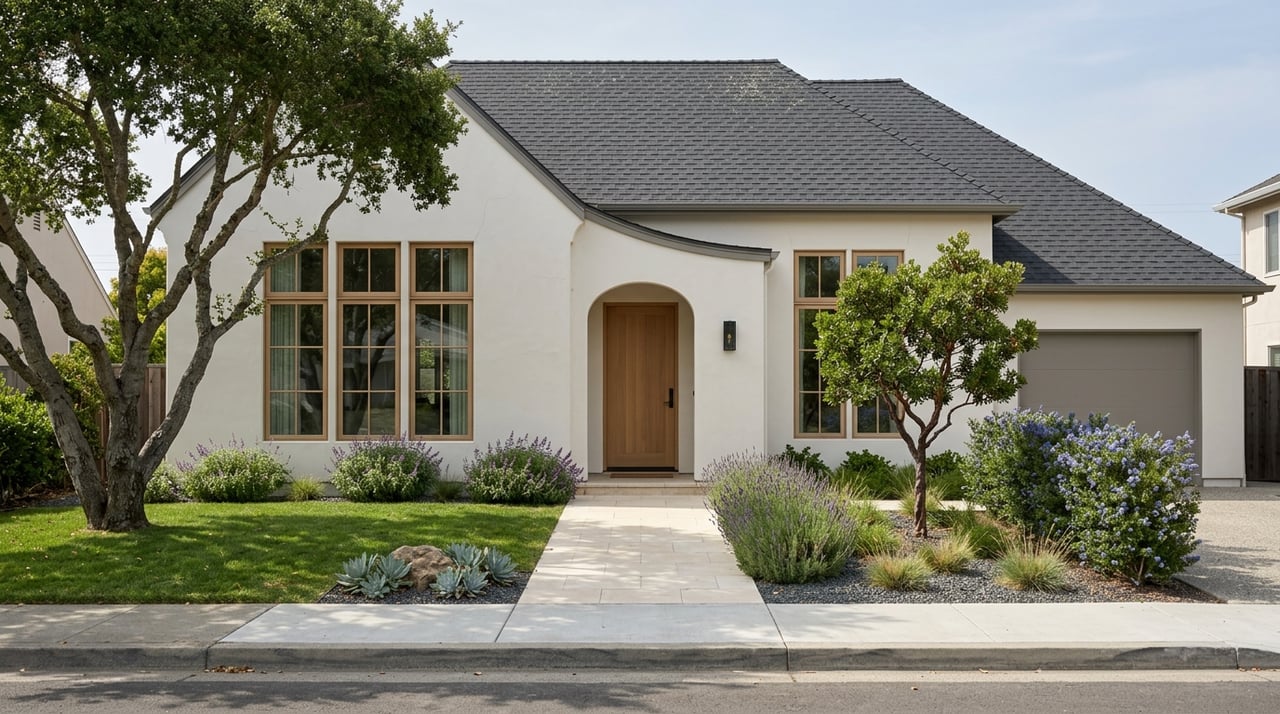
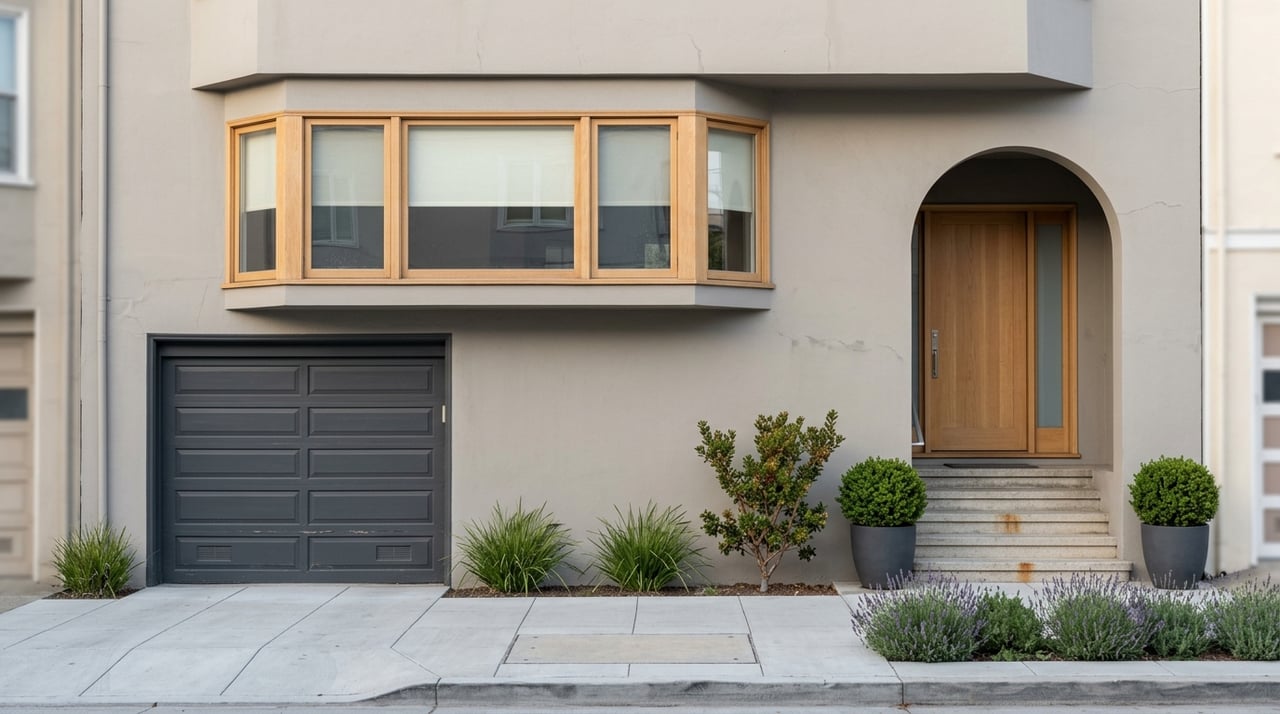
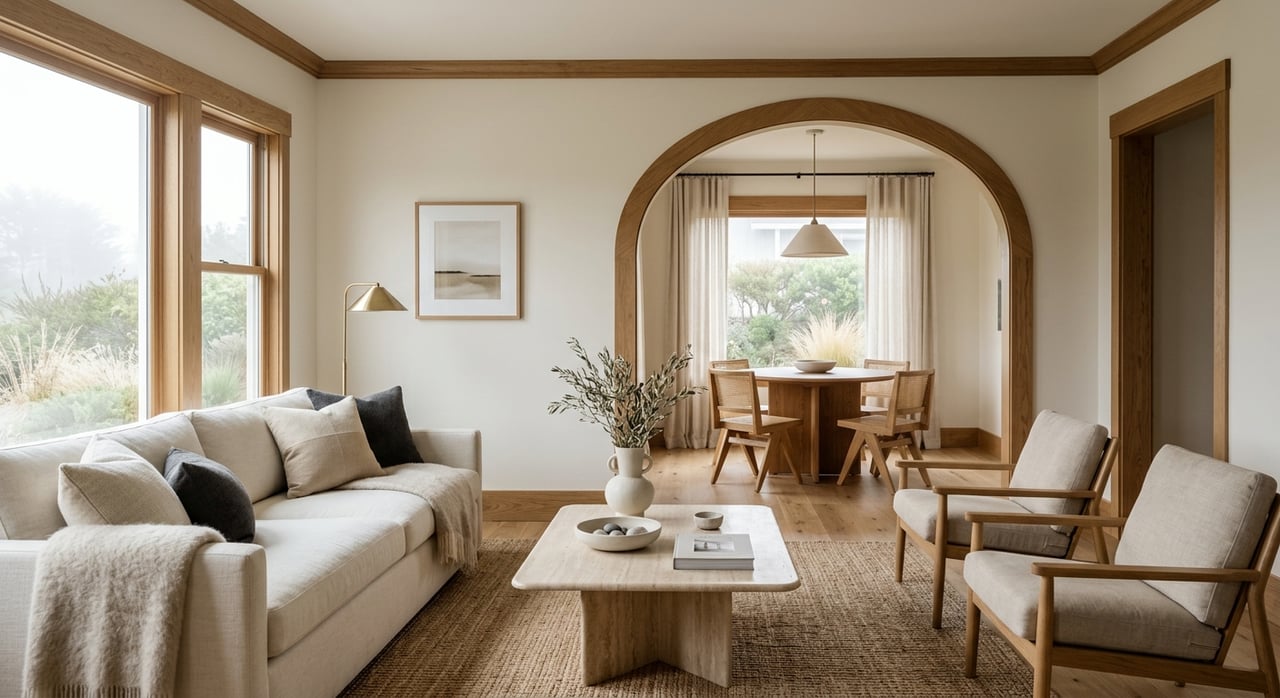
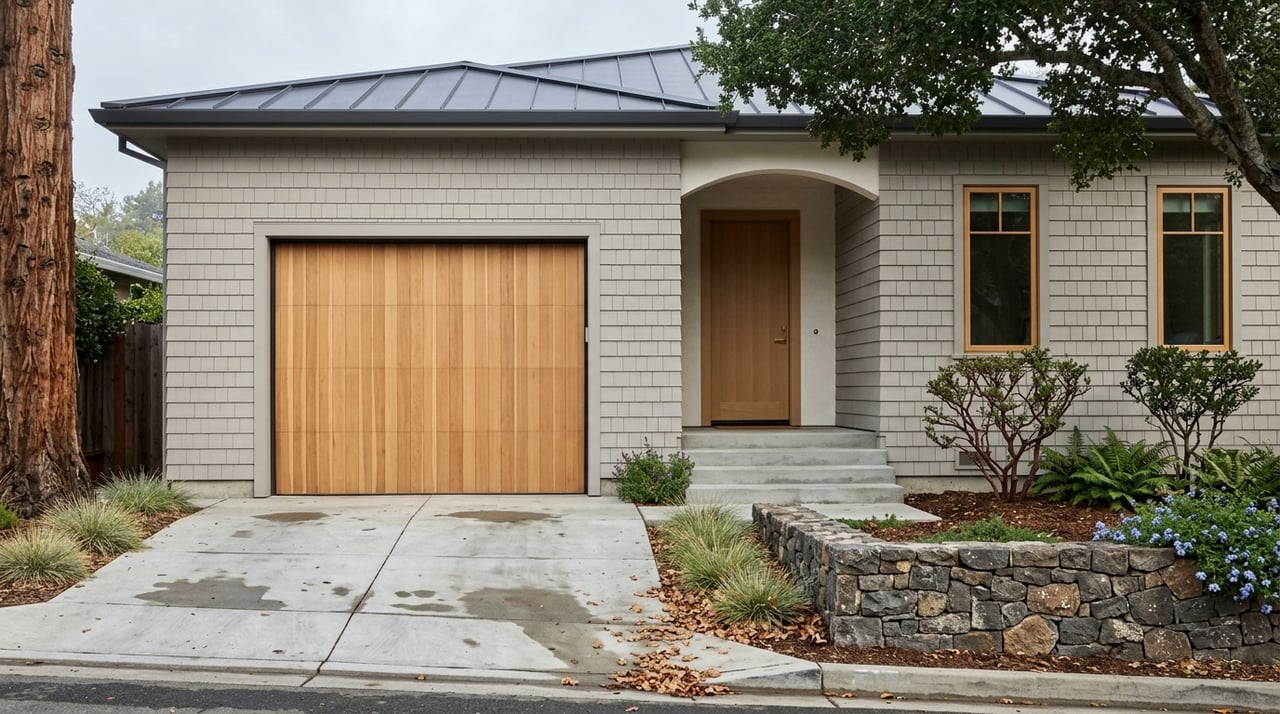
Mill Valley’s housing stock is one of the most interesting parts of the market because it reflects both history and terrain. The city’s historic survey shows that much of the notable housing dates from the late 19th and early 20th centuries, with roughly 160 surveyed buildings constructed before 1930. That history gives parts of the city a character that feels established and layered.
Architectural styles noted in the city survey include Vernacular, First Bay Tradition, Queen Anne, Italianate, Tudor, Craftsman, Colonial Revival, Spanish Colonial Revival, Classical Revival, and Art Deco. Postwar and later design also matter, with notable examples of Midcentury Modern, Second Bay Tradition, and Third Bay Tradition. For buyers, that means the housing mix can feel visually varied even within a relatively small area.
Topography Shapes the Housing Experience
The city describes Mill Valley as extremely hilly, with many old, narrow, curving residential streets. Miller Avenue is relatively flat and serves as the main commercial corridor from Richardson Bay to downtown. That terrain affects not just the look of the city, but how homes live and feel.
Closer to the core, you may find older cottages and early-20th-century homes. In hillside areas, the setting often shifts toward larger or more secluded properties, along with later-era homes. Even when two homes are close on a map, the day-to-day experience can be quite different because of elevation, access, and street pattern.
What Buyers Can Expect on Price
Mill Valley is firmly in the upper end of the Bay Area market, but there is still a meaningful range depending on property type and location. Recent market data points to a market center around the low-$2 million range. Redfin reports a median sale price of $2,548,475 for the three months ending May 2026, Zillow shows a typical home value of $2,173,667 as of May 31, 2026, and Realtor.com lists median asking prices near roughly $1.995 million to $2.2 million.
These numbers are not interchangeable, but together they help set expectations. Mill Valley is expensive by almost any measure, yet it still offers several pricing bands within a small footprint. That is useful if you are trying to balance lifestyle goals with budget.
Typical Price Bands
Here is a simple way to think about the current market:
- Entry and attached homes: roughly high-$800,000s to around $1.7 million
- Core detached homes: roughly $1.8 million to $3 million
- Luxury and larger-lot homes: $3 million and up, with some listings reaching well beyond that
This range matters because it gives different types of buyers a way into the market. You might focus on an attached home near daily conveniences, or you might prioritize a detached property with more privacy and space. In Mill Valley, the lifestyle can shift noticeably across those price points.
What Daily Living Really Feels Like
The simplest way to describe Mill Valley is outdoors-first without feeling isolated. You have parks, paths, and iconic redwood access, but you also have a compact downtown, local-serving commercial districts, and transit connections to nearby Marin communities. That combination is what gives the town its staying power.
For some buyers, the appeal is the chance to walk more and drive less for local routines. For others, it is the housing character, from older homes near the center to hillside properties with a more tucked-away feel. In either case, Mill Valley tends to attract people who care about the details of place, not just square footage.
If you are comparing Mill Valley with other Marin communities, it helps to look closely at how your routine would actually work here. Trail access, street layout, downtown proximity, home style, and price point can all vary more than you might expect inside one town. That is why neighborhood-level guidance matters.
If you are considering a move in Mill Valley or comparing Marin options with San Francisco, Aimee Labagh Tenente can help you evaluate the micro-markets, identify the right fit, and navigate opportunities with a polished, local-first approach.
FAQs
What is Mill Valley known for in Marin County?
- Mill Valley is known for its strong connection to outdoor living, including parks, redwood settings, and a city-maintained Steps, Lanes, and Paths network, along with a compact, local-serving downtown.
How far is Mill Valley from San Francisco?
- Mill Valley is about 14 miles north of San Francisco, according to the city.
What does downtown Mill Valley feel like?
- Downtown Mill Valley feels compact, walkable, and locally focused, with small-scale businesses, civic spaces, and community gathering areas near Lytton Square and Depot Plaza.
Are there different home styles in Mill Valley?
- Yes. Mill Valley includes a mix of older and newer homes, with styles noted by the city such as Craftsman, Tudor, Colonial Revival, Spanish Colonial Revival, Art Deco, and Midcentury Modern.
What is the typical home price range in Mill Valley?
- Current market data suggests attached homes can start in the high-$800,000s, many detached homes fall roughly between $1.8 million and $3 million, and luxury properties often start above $3 million.
Can you get around Mill Valley without driving everywhere?
- In some cases, yes. Mill Valley has a walk-and-bike network, local commercial areas, Marin Transit Bus #17 service, and a connection to the Mill Valley-Sausalito Bike Path.